The Catholic Parish of Brixham & Dartmouth

Dartmouth, Devon

St John the Baptist – Dartmouth

Faith and Community by the River Dart

St John the Baptist stands in Dartmouth, near the mouth of the River Dart, where the river meets the sea. Whether you live in the town or are visiting, you are warmly welcome to join us for Mass.

  • Address: 20 Newcomen Road, Dartmouth TQ6 9BN
  • Mass: Saturday 5.00pm (vigil Mass of Sunday) and Thursday 10.30am
  • Confession: by appointment. Phone 01803 853406
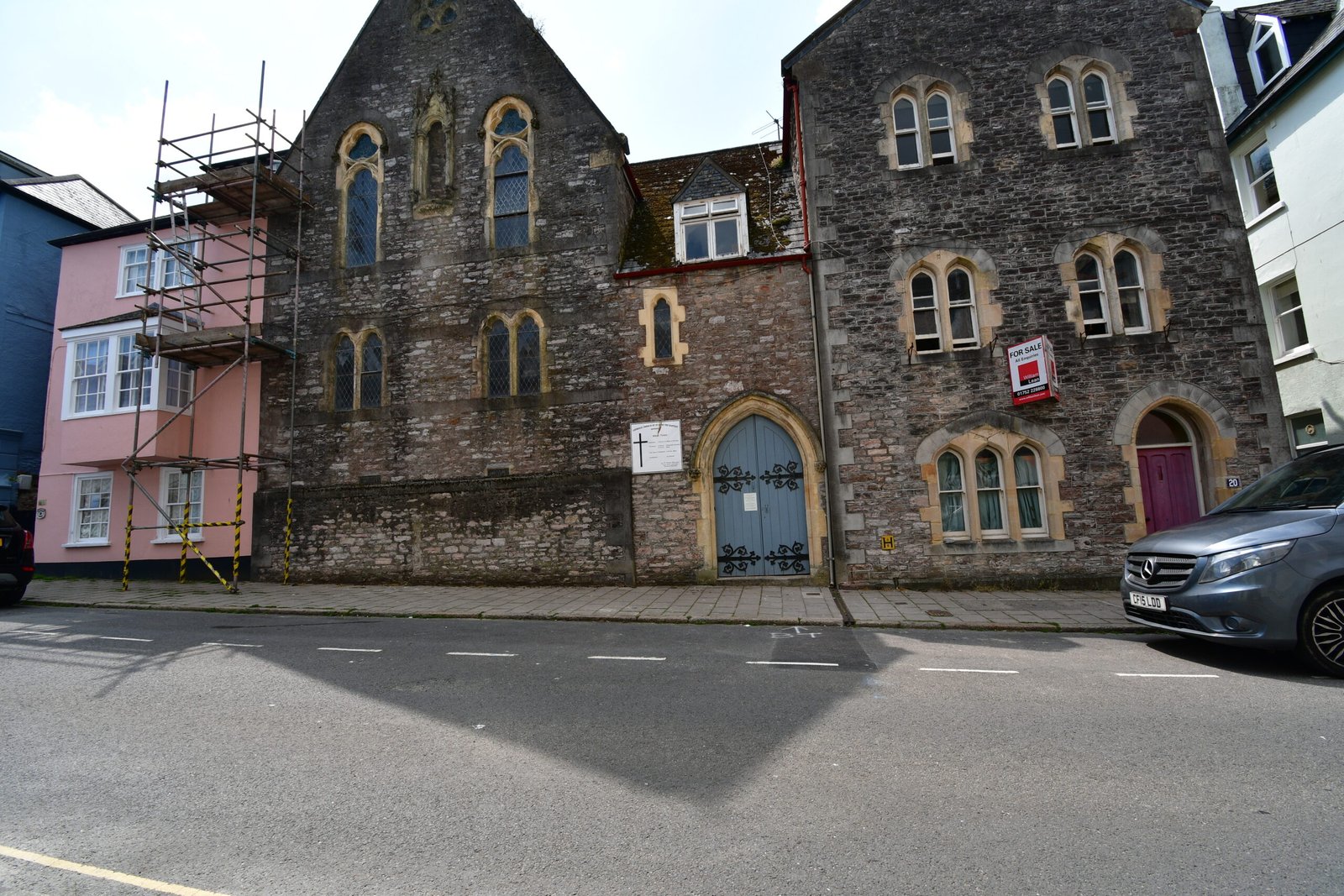
The stone Gothic Revival front of St John the Baptist Catholic Church on Newcomen Road, Dartmouth
Photo: St John the Baptist, Dartmouth, by Simon Cobb (CC0)

A Welcome to Dartmouth

Dartmouth has long been a town shaped by the river and the sea. Our church on Newcomen Road is a place of prayer for local Catholics, for families, and for the many visitors who come to Dartmouth through the year.

St John the Baptist is one of the two churches of our parish. It is served together with Our Lady, Star of the Sea in Brixham by our Parish Priest, Fr Sunny Paul, MSFS.

A word from the Dartmouth communitySpace for a short welcome written by parishioners at St John’s. To be supplied by the parish.

The History of St John the Baptist

A Parish Community by the River Dart

Introduction

St John the Baptist is situated in Dartmouth, near the mouth of the River Dart where it meets the sea. For centuries the town’s life has been bound up with the river and the sea, and so has the story of its Catholic community.

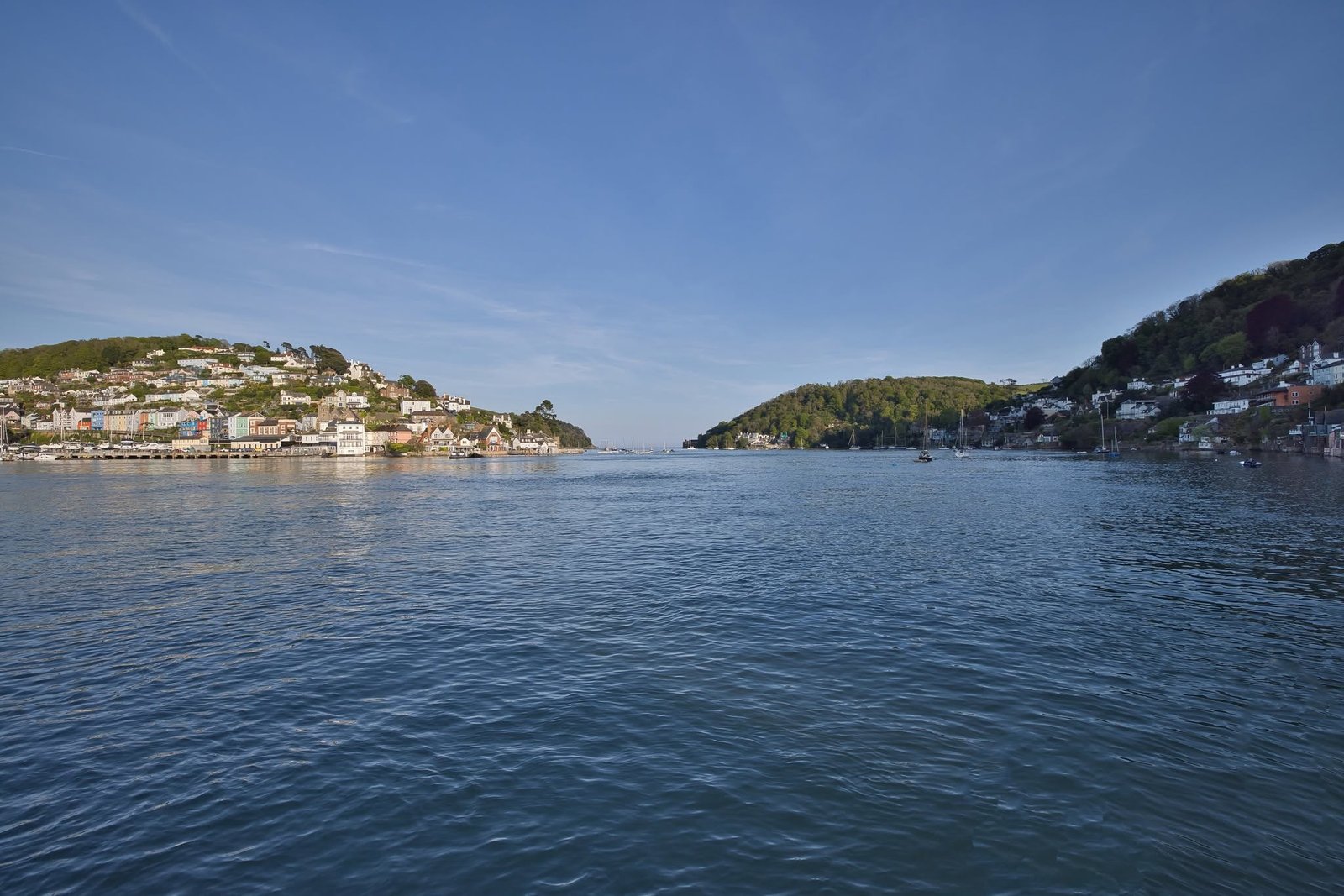
The wide, calm River Dart flowing between wooded hills towards its mouth and the open sea, with Kingswear on the far bank
The River Dart near its mouth, where the river meets the sea. Photograph from the parish.

Before the Reformation there were three churches in Dartmouth, all following the Catholic faith: St Petrox, dedicated to the Celtic monk whose followers are thought to have had a monastic cell at the mouth of the river in the 6th century; St Clement’s at Townstal, rebuilt in about 1200; and St Saviour’s, consecrated in 1372 and first called Holy Trinity. After the Reformation all three became Church of England churches, and the Catholic faith survived quietly through families such as the Cary family of Torre Abbey.

Background and Parish Development

1782 – 1821A mission for seafarers

In about 1780 Rowland Conyers of Plymouth, a wine merchant moved by the poverty he saw in Plymouth and Dartmouth, set up a trust to help seafarers in the South West, including funds to keep a priest in Dartmouth. Many local merchants traded with Portugal, Italy and Newfoundland, death at sea was common, and seafarers sought a blessing before their voyages.

In March 1782 Bishop Charles Walmesley sent Rev Charles Timings to found a small Catholic mission in Lower Street, where Mass was held in a small hired room. Fr Timings reported about 20 Catholics in Dartmouth at the time, and served the mission for 19 years. French priests who had fled the Revolution later helped, among them Abbé Pierre Charles Le Verrier, who settled in Dartmouth. As the Newfoundland trade declined, the Conyers funds were moved to a new mission at Weymouth, and the Dartmouth mission closed in 1821.

1858 – 1866A new beginning

In 1858 Lord Henry Francis Kerr, Rector of Dittisham since 1827, who had become a Catholic in 1852, wrote to Bishop William Vaughan of Plymouth promising £1,000 to re-establish a Catholic mission in Dartmouth. From 1860 a room was rented in Atkin’s Lane (now Chapel Lane), where Mass was offered from time to time.

In 1864 Bishop Vaughan bought land off Higher Street, including the early 18th-century house that is now 21 Newcomen Road, for £250. At the same time the town was building the new Newcomen Road, designed by the engineer William Bell, and many old houses in Higher Street were cleared. In 1866 Fr Jean Baptiste Laborie Rey was appointed priest, and a temporary chapel was opened while the church was planned.

1867 – 1876Building St John the Baptist

The church was designed by Joseph Aloysius Hansom, architect of Plymouth Cathedral and inventor of the Hansom cab. It was built in 1867 and opened in 1868, probably making use of the shell of almshouses built around 1630. In March 1869 Bishop William Vaughan solemnly blessed the church, dedicated it to St John the Baptist and consecrated it. A Catholic school was built the same year. In 1873 the Marquis of Bute visited and gave £350 to add a sanctuary to the nave, which was completed in 1876.

1869 – todayThe parish through the years

Fr Rey served the church until his death in 1884; a small plaque in his memory is beside the altar. His successors cared for a large area of the South Hams, travelling on horseback, by carriage or on foot. Through two world wars, slum clearance, the growth of the Royal Naval College and the changing fortunes of the port, St John’s has remained a place of prayer at the heart of the old town. Since 2010, Fr Sunny Paul, based in Brixham, has celebrated Mass for Dartmouth parishioners twice each week as well as weddings and funerals.

Important Milestones

  1. The Dartmouth mission is founded

    Bishop Charles Walmesley sends Rev Charles Timings to found a Catholic mission in Lower Street.

  2. The first mission closes

    With the Newfoundland trade in decline, the mission’s funds are moved to Weymouth and the Dartmouth mission closes.

  3. Lord Henry Kerr’s gift

    Lord Henry Kerr promises £1,000 to re-establish a Catholic mission in the port of Dartmouth.

  4. Land on Higher Street

    The house, garden and premises that are now 21 Newcomen Road are conveyed to Bishop William Vaughan for £250.

  5. Fr Rey arrives

    Fr Jean Baptiste Laborie Rey is appointed priest, and a temporary chapel is established.

  6. 1867 – 1868

    The church is built and opened

    St John the Baptist, designed by Joseph Aloysius Hansom, is built in 1867 and opened in 1868.

  7. Blessing and consecration

    Bishop William Vaughan solemnly blesses the church, dedicates it to St John the Baptist and consecrates it. The Catholic school is built the same year.

  8. 1873 – 1876

    The sanctuary

    A gift of £350 from the Marquis of Bute pays for a sanctuary to be added to the nave, completed in 1876.

  9. A new altar

    With the support of parishioners, an altar of fine Malplaquet stone (Belgian marble) is installed, together with statues of saints.

  10. A 500-year lease

    The lease of the church premises on Newcomen Road is renewed for a term of 500 years from Michaelmas 1912.

  11. 1951 – 1964

    A new floor

    Fr Andrew O’Keefe oversees the complete replacement of the church floor.

  12. St John the Baptist Catholic Primary School

    A new Catholic primary school, St John the Baptist, opens next to the new Milton Lane Community College.

  13. 2010 – today

    Served from Brixham

    Fr Sunny Paul, MSFS, based in Brixham, celebrates Mass for Dartmouth twice each week.

  14. Date to be added

    Add a milestone

    Space for the parish to add further milestones, anniversaries and celebrations. Please send details to the parish office.

Church Architecture and Photographs

St John the Baptist is a Gothic Revival church in the early Decorated style, with a three-storey gable end facing the street. It is built of local limestone rubble with Bath stone dressings and a slate roof. The priest’s house was built with the church, and a linking block joins the two in a U-shaped plan. Both the church and the house next door are Grade II listed, in Dartmouth’s conservation area.

Inside, there are two ornate stone reredoses, a gallery at the street end and an open, scissor-braced timber roof. An 1883 directory described the church as having “a chancel, nave and 2 stained glass windows”, with statues of St Patrick, St William of York, St Winifred and St Cecilia.

Architect
Joseph Aloysius Hansom (1803 to 1882)
Main altar
Malplaquet stone (Belgian marble), 1887
Lady Altar
A personal gift of Fr John Charles McCarthy (1891 to 1911)
Sanctuary
Added 1873 to 1876, the gift of the Marquis of Bute
Memorials
Plaques to Fr Rey and Fr McCarthy
The stone Gothic Revival front of St John the Baptist Catholic Church on Newcomen Road, Dartmouth
The church on Newcomen Road today. Photo: St John the Baptist, Dartmouth, by Simon Cobb (CC0)
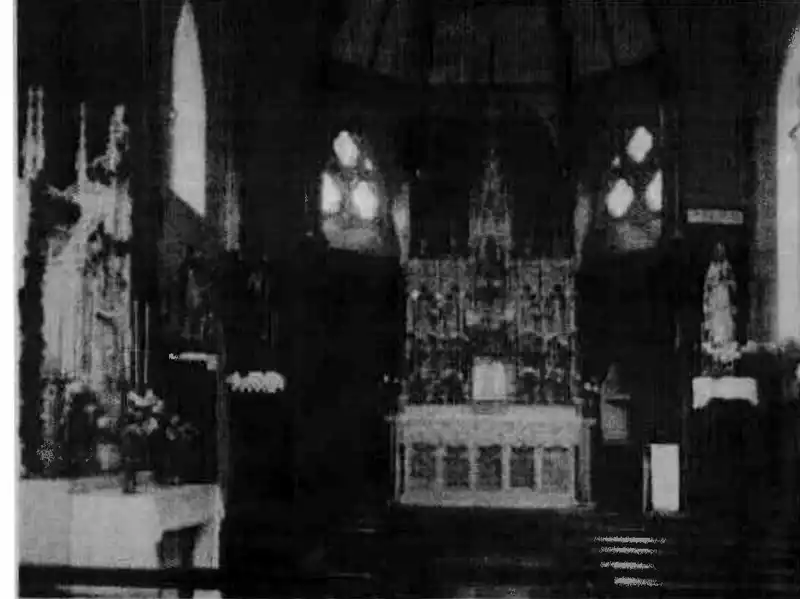
Black and white photograph of the church interior in 1925, showing the carved main altar and reredos, with the Lady Chapel and statues to either side
The main altar and Lady Chapel, 1925. From the parish history.
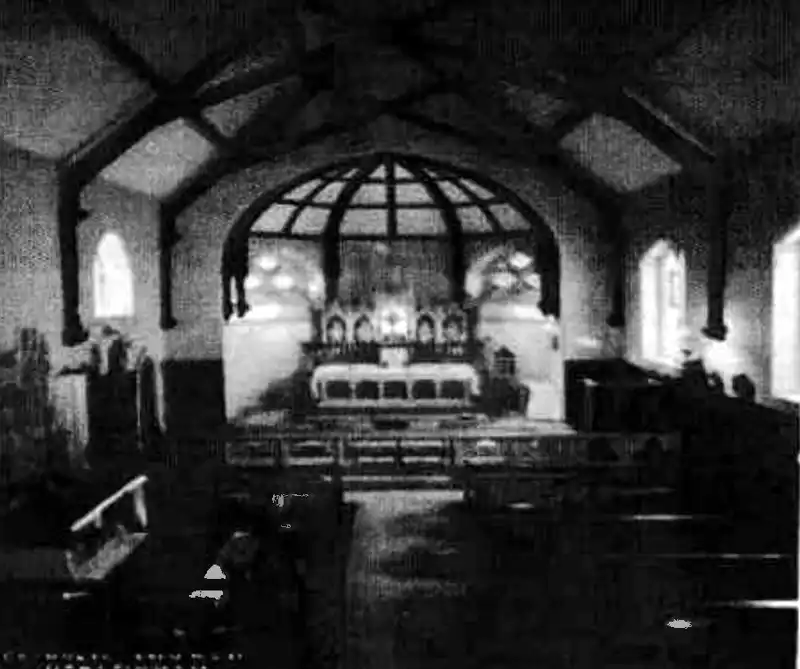
Black and white photograph of the church interior in 1960, looking down the nave past the benches to the altar under the arched timber roof
The interior of the church, 1960. From the parish history.

Priests Who Have Served St John the Baptist

From the founding of the Dartmouth mission in 1782 to today.

  1. 1782 – 1801Rev Charles TimingsFounded the Dartmouth mission in Lower Street
  2. 1799 – 1815Abbé Pierre Charles Le VerrierFrench priest in exile, settled in Dartmouth for mission duties
  3. 1805 – 1814Rev William Davis
  4. 1814 – 1821Abbé Alexander SimonsSupply priest; the mission closed in 1821
  5. 1820s – 1840sPriests at Torre AbbeyDartmouth Catholics are thought to have been served from Torre Abbey
  6. 1863Rev J JollyMass offered in a rented room in Atkin’s Lane
  7. 1866 – 1884Fr Jean Baptiste Laborie ReyFirst priest of St John the Baptist
  8. 1884 – 1891Fr William Francis Downing
  9. 1891 – 1911Fr John Charles McCarthy
  10. 1912 – 1917Fr Patrick Dennis Leahy
  11. 1917 – 1923Fr Francis Daniels
  12. 1923 – 1936Fr John Joseph Fanning
  13. 1936 – 1951Fr Francis Hodge MA
  14. 1951Fr Wilfred MaloneTemporary
  15. 1951 – 1964Fr Andrew O’Keefe
  16. 1964 – 1983Canon Michael Kennedy
  17. 1984Canon George Hay MALater Monsignor
  18. 1985Rev Costello
  19. 1985 – 1988Rev Ian JonesLater Monsignor
  20. Before 1989Fr Benno Wolfe and Rev Ben CouchShort periods
  21. 1989 – 2007Fr Christopher Smith BAAlso served Brixham from 1998
  22. Until 2009Fr Paul ConnorTemporary
  23. 2010 – todayFr Sunny Paul, MSFSOur current Parish Priest

Parish Community Memories

Moments from the life of St John’s recorded in the parish history.

1895

A royal visitor from Italy

In 1895 an Italian yacht arrived in port with the Duke of Genoa on board. The Duke and his retinue attended Mass given by Fr McCarthy at the church.
1935

The King of Spain

In the 1930s Juan de Bourbon, son and heir of King Alfonso of Spain, was a cadet at the Royal Naval College. After his son’s graduation in 1935, the King visited Dartmouth and came to Holy Mass at St John the Baptist.

1936 – 1951

A priest in wartime

Fr Francis Hodge served the parish from 1936 to 1951, through the Second World War, when Dartmouth became a busy naval port full of ships and American troops, many of them Catholics. In June 1944, 485 craft left Dartmouth for D-Day. In 1948 Fr Hodge arranged the reburial of remains found when the old town jail was demolished, thought to be monks of the medieval Chapel of the Holy Trinity.

1869 onwards

The parish school

The Catholic school on Newcomen Road opened in 1869; its first teacher was Margaret Graham. For many years it had only two rooms, teaching children up to the age of 15, and it was often attended by children of other denominations.

1989 – 2007

Fr Christopher Smith

Fr Smith served Dartmouth from 1989 to 2007, and Brixham as well from 1998, crossing the Dart each day. Easily recognised by his mop of red hair, he was a popular figure well beyond the Catholic community, often seen at ‘Christians Together’ events in the town. His funeral was held first at St John the Baptist, the little church he loved, and later the same day at St Saviour’s.

Your memories

Share a memory

Do you remember a First Communion, a wedding or a special occasion at St John’s? Please contact the parish office so we can add your memories, or see our Old Memories photo archive.

Additional Historical Notes

Catholics in England after the Reformation

After the Reformation, Catholic worship was forbidden and survived in secret, often in chapels kept by gentry families or foreign embassies. Wealthy families such as the Carys of Torre Abbey, whose chapel was the only Catholic place of worship in Torquay until 1854, kept priests who served Catholics over a wide area. By the end of the 18th century Catholics could worship in licensed chapels; in South Devon these were at Plymouth, Exeter, Dartmouth and Axminster. Catholic emancipation followed in 1829, and on 29 September 1850 the Catholic hierarchy of bishops and dioceses was restored in England and Wales. In 1851 George Errington became the first Bishop of Plymouth, a diocese covering Devon, Cornwall and Dorset.

Between the missions, 1821 to 1858

After the first mission closed, Dartmouth’s Catholics are thought to have received Mass from priests sheltered at Torre Abbey by the Cary family. Dartmouth remained a busy port, with ship-building, rope making and trade with Spain and Portugal, and its population grew from 3,411 in 1801 to 4,485 in 1821.

21 Newcomen Road

The house bought in 1864 dates from the early 18th century and is the only survivor of the three properties on the site; the others were demolished to make way for the church. It is end-on to the street, with stone walls at ground level, timber-framed upper storeys and many original Georgian features, and was listed Grade II in 1972. Deeds show that in the late 18th century a former owner left it so that its rents might support ‘the celebration and ceremonies of the Roman Catholic Church’. The church held the freehold for a hundred years before the house, then called Newcomen Cottage, was sold at auction in 1964.

Newcomen Road and the old town

In 1863 the town announced a new road from New Quay to Bearscove Hill, designed by the Scottish civil engineer William Bell, who also engineered the railway from Paignton to Kingswear. Many houses in Higher Street and Lower Street, including the house of Thomas Newcomen, were demolished for it, and the road, carried on a viaduct above Bayard’s Cove, was considered a remarkable feat of engineering. The church took its place on the new street.

Hardship and generosity in the town

Around 1900 many families near the church were the families of coal lumpers, casual labourers paid to carry coal, living in crowded tenements. During the First World War the cost of coal brought great hardship, and Fr Francis Daniels, a strong supporter of the poor, worked with the trade unions to press the council for affordable supplies, with some success.

Catholic education in Dartmouth

Education has always mattered to the Catholic mission here. The school built in 1869 was enlarged in 1886. In 1962 St Cuthbert Mayne Catholic secondary school opened in Torquay, taking children from Dartmouth, and in 1975 it became the first joint Roman Catholic and Anglican comprehensive school in Britain. In 1974 St John the Baptist Catholic Primary School opened next to Milton Lane Community College, and it welcomes many children who are not Catholic.

Source: “St John the Baptist Church: Catholics in Dartmouth, 1782–2012”, the parish history, which also draws on census returns, Kelly’s Directories and the church’s deeds. Architectural details also from Taking Stock (Historic England and the Diocese of Plymouth).

Parish Community Today

The Saturday evening vigil Mass at St John’s brings the Dartmouth community together each weekend, and a weekday Mass is celebrated on Thursday mornings.
Groups and activities at St John’sDetails of any regular prayer groups, coffee mornings or volunteer roles in Dartmouth. To be supplied by the parish.

Also in our parish: Brixham

Our Lady, Star of the Sea

Sunday Mass at 10.00am, with Mass on Tuesday, Wednesday, Friday and Saturday mornings.

43 New Road, Brixham TQ5 8NB
Scroll to Top